How a round of taarof works
Most taarof follows the same shape. The host offers. You decline politely, often by thanking them. The host insists, usually with a warmer reason: you barely ate, I made it just for you, or simply تعارف نکن (don't be shy). After the second or third offer you either accept with thanks or hold firm with a clear signal that you mean it. The same shape runs in reverse when you are the one offering. The lines on this page are in colloquial Tehran Persian, the way people speak at home, so they are spelled as spoken (نداره, میشه) rather than in formal written forms. Persian script reads right to left.
- Offer: the host invites you in, offers food, or refuses your money.
- Decline: you thank them and say you are fine. This is expected, not rude.
- Insist: the host repeats the offer, often more warmly or with a reason.
- Settle: you accept a little, or you repeat your no with a sign that it is real.
The phrases that carry taarof
These come up in almost every round. Many have a formal plural form for elders and strangers (دستتون) and an informal form for close family and friends (دستت).
بفرمایید
Reading: befarmaid
Meaning: Please, go ahead.
The all-purpose offer: come in, sit down, help yourself, after you, here you go. To one close person, people often say بفرما.
تعارف نکنید
Reading: taarof nakonid
Meaning: Don't be shy. Please, help yourself.
To someone younger or close: تعارف نکن. It asks you to drop the polite refusals.
قابل نداره
Reading: ghabel nadare
Meaning: It's nothing. Don't mention it.
Literally, it isn't worthy of you. Said when giving a gift or refusing payment. You will also hear قابلی نداره, and the warmer قابل شما رو نداره. Online it is often spelled ghabel nadareh or qabel nadare.
دستتون درد نکنه
Reading: dastetoon dard nakone
Meaning: Thank you so much for all your effort.
Literally, may your hand not hurt. Informal: دستت درد نکنه. The usual reply is سرتون درد نکنه, may your head not hurt.
خواهش میکنم
Reading: khahesh mikonam
Meaning: You're welcome. / Please, I insist.
It answers thanks, and it also pushes back when someone refuses your offer or your money.
شرمندهم کردید، زحمت کشیدید
Reading: sharmandam kardid, zahmat keshidid
Meaning: You shouldn't have. I feel bad you went to the trouble.
Said when you receive a gift, a meal, or a favor. Feeling embarrassed by someone's kindness is the polite stance. On its own, شرمنده (sharmandeh) is also an everyday way to say sorry, for example when you can't accept.
اختیار دارید
Reading: ekhtiar darid
Meaning: Oh, please, not at all.
Use it when someone plays down their own gift or refuses your thanks or payment. It politely disagrees with their modesty.
جدی میگم، تعارف نمیکنم
Reading: jeddi migam, taarof nemikonam
Meaning: I mean it. I'm not just being polite.
The clearest signal that your yes or your no is real. Hosts use it too.
ببخشید، متوجه نشدم. میشه یه بار دیگه بگید؟
Reading: bebakhshid, motevajjeh nashodam. mishe ye bar dige begid?
Meaning: Sorry, I didn't catch that. Could you say it again?
Your repair line when an elder speaks fast or uses an expression you don't know.
At the door: shoes and a small gift
You arrive at your aunt's home for a family dinner with a box of pastries. In many Iranian homes guests take their shoes off at the door, and the host may say not to bother. She speaks to you informally; you use the polite form with her, as many families do with aunts.
Aunt
سلام عزیزم، خوش اومدی! بفرما تو.
Reading: salam azizam, khosh oomadi! befarma too.
Meaning: Hi, sweetheart, welcome! Come on in.
You
سلام خالهجون. کفشامو دربیارم؟
Reading: salam khaleh joon. kafshamo dar biyaram?
Meaning: Hi, Auntie. Should I take my shoes off?
Aunt
نه بابا، لازم نیست، بیا تو.
Reading: na baba, lazem nist, bia too.
Meaning: Oh, don't bother, just come in.
You
نه، اینجوری راحتترم. اینم یه چیز ناقابل.
Reading: na, injoori rahat-taram. inam ye chiz-e naghabel.
Meaning: No, I'm more comfortable this way. And here's a little something.
Aunt
وای، چرا زحمت کشیدی؟ راضی به زحمتت نبودیم!
Reading: vay, chera zahmat keshidi? razi be zahmatet naboodim!
Meaning: Oh, why did you go to the trouble? You shouldn't have!
You
خواهش میکنم، قابل شما رو نداره.
Reading: khahesh mikonam, ghabel-e shoma ro nadare.
Meaning: Please, it's nothing compared to what you deserve.
Aunt
دستت درد نکنه عزیزم. بفرما بشین.
Reading: dastet dard nakone azizam. befarma beshin.
Meaning: Thank you, dear. Please, have a seat.
The audio uses the AI voice you hear in ChitterChatter conversations.
At the table: the second and third helping
Dinner at your grandmother's. She calls you by an affectionate word for a child, and she has already filled your plate once. You use the polite form with her, as many families do with grandparents.
Grandmother
بیا مادر، یه کم دیگه برنج بکش. تعارف نکن.
Reading: bia madar, ye kam dige berenj bekesh. taarof nakon.
Meaning: Come on, dear, have some more rice. Don't be shy.
You
دستتون درد نکنه مامانجون، خیلی خوردم.
Reading: dastetoon dard nakone maman joon, kheyli khordam.
Meaning: Thank you, Grandma, I've already had a lot.
Grandmother
تو که چیزی نخوردی! این قورمهسبزی رو مخصوص تو درست کردم.
Reading: to ke chizi nakhordi! in ghormeh-sabzi ro makhsoos-e to dorost kardam.
Meaning: You've barely eaten anything! I made this herb stew just for you.
You
خیلی خوشمزهست، ولی واقعاً سیر شدم.
Reading: kheyli khoshmazast, vali vaghean sir shodam.
Meaning: It's delicious, but I'm honestly full.
Grandmother
فقط یه قاشق دیگه!
Reading: faghat ye ghashogh dige!
Meaning: Just one more spoonful!
You
باشه، ولی فقط یه ذره. جدی میگم، دیگه بسه!
Reading: bashe, vali faghat ye zarreh. jeddi migam, dige bas-e!
Meaning: Okay, but just a tiny bit. I mean it, that's enough!
Grandmother
نوش جونت.
Reading: noosh-e joonet.
Meaning: Enjoy it, my dear.
The audio uses the AI voice you hear in ChitterChatter conversations.
At the counter or in a taxi: when they won't take your money
You buy a bag of fruit at a small neighborhood shop in Tehran. Almost every shop in Iran takes bank cards, so you will pay with a card reader. A taxi driver who waves away your fare at the end of a ride runs through the same rounds, and you answer the same way.
You
آقا، اینا چقدر میشه؟
Reading: agha, ina cheghadr mishe?
Meaning: Excuse me, sir, how much for these?
Shopkeeper
قابل نداره، بفرمایید.
Reading: ghabel nadare, befarmaid.
Meaning: It's nothing, please take them.
You
خواهش میکنم، اختیار دارید. چقدر شد؟
Reading: khahesh mikonam, ekhtiar darid. cheghadr shod?
Meaning: Please, not at all. What do I owe you?
Shopkeeper
مهمون ما باشید.
Reading: mehmoon-e ma bashid.
Meaning: Be our guest.
You
لطف دارید، ولی جدی میگم. چقدر تقدیم کنم؟
Reading: lotf darid, vali jeddi migam. cheghadr taghdim konam?
Meaning: That's kind of you, but I mean it. How much do I owe?
Shopkeeper
چشم. بفرمایید، کارت بکشید.
Reading: cheshm. befarmaid, kart bekeshid.
Meaning: Of course. Here you go, swipe your card.
You
مرسی، خسته نباشید.
Reading: mersi, khasteh nabashid.
Meaning: Thanks. Don't work too hard.
Shopkeeper
سلامت باشید.
Reading: salamat bashid.
Meaning: Take care.
The audio uses the AI voice you hear in ChitterChatter conversations.
From a real practice session
Our team ran this situation in ChitterChatter using the description in the practice section below. A synthetic voice spoke the learner's lines; the AI character's replies and the feedback are what ChitterChatter produced. Here are the first lines of the conversation, lightly trimmed.
Aunt
نوش جونت! یه کم دیگه برنج برات بکشم؟
Reading: noosh-e joonet! ye kam dige berenj barat bekesham?
Meaning: Enjoy, dear! Shall I give you a little more rice?
You
مرسی خاله جون، واقعا خوشمزهست ولی دیگه سیر شدم. دستتون درد نکنه.
Reading: mersi khaleh joon, vaghean khoshmazast vali dige sir shodam. dastetoon dard nakone.
Meaning: Thanks, Auntie. It's really delicious, but I'm full now. Thank you so much for all your effort.
Aunt
قربونت برم، نوش جان. ولی یه قاشق کوچیک دیگه هم بد نیست، تعارف نکن.
Reading: ghorboonet beram, noosh-e jan. vali ye ghashogh-e koochik-e dige ham bad nist, taarof nakon.
Meaning: Oh, sweetheart, enjoy. But one more small spoonful wouldn't hurt. Don't be shy.
You
نه خاله جون، واقعا دیگه جا ندارم، ولی اگه خیلی کم بریزین، اشکال نداره. واقعا ممنونم.
Reading: na khaleh joon, vaghean dige ja nadaram, vali age kheyli kam berizin, eshkal nadare. vaghean mamnoonam.
Meaning: No, Auntie, I really don't have any room left, but if you give me just a little, that's fine. Thank you so much.
Aunt
چشم عزیزم، باشه فقط یه کم. تو همین حد که مزه کنی.
Reading: cheshm azizam, bashe faghat ye kam. too hamin hadd ke mazeh koni.
Meaning: Of course, dear. Okay, just a little, just enough to taste it.
You
مرسی خاله جون، خیلی زحمت کشیدین. واقعاً غذاهاتون مثل همیشه عالی بود. میشه بعداً یه لیوان چای هم بخورم؟
Reading: mersi khaleh joon, kheyli zahmat keshidin. vaghean ghazahatoon mesl-e hamisheh ali bood. mishe ba'dan ye livan chai ham bokhoram?
Meaning: Thanks, Auntie, you went to so much trouble. Your food was wonderful, as always. Could I have a glass of tea later, too?
Aunt
قربونت برم، چایی آماده میشه. کمرنگ دوست داری یا پررنگتر؟
Reading: ghorboonet beram, chayi amadeh mishe. kam-rang doost dari ya por-rang-tar?
Meaning: Of course, sweetheart, the tea will be ready soon. Do you like it weak or stronger?
You
خاله جون، اگه میشه چای کمرنگ باشه، خیلی ممنون. راستی این سالاد شیرازی رو خودتون درست کردین؟ خیلی خوشمزهست.
Reading: khaleh joon, age mishe chai kam-rang bashe, kheyli mamnoon. rasti in salad-e shirazi ro khodetoon dorost kardin? kheyli khoshmazast.
Meaning: Auntie, weak tea, please, if that's okay. Thanks so much. By the way, did you make this Shirazi salad yourself? It's really tasty.
Aunt
آره عزیزم، خودم خردش کردم. خوشحالم خوشت اومده.
Reading: areh azizam, khodam khordesh kardam. khoshhalam khoshet oomadeh.
Meaning: Yes, dear, I chopped it myself. I'm glad you like it.
You
خاله جون واقعاً دستتون درد نکنه، خیلی خوشحالم امشب اینجا بودم. شما همیشه سالاد شیرازی رو خیلی خوشمزه درست میکنین. توش پیازش رو زیاد ریختین؟
Reading: khaleh joon vaghean dastetoon dard nakone, kheyli khoshhalam emshab inja boodam. shoma hamisheh salad-e shirazi ro kheyli khoshmazeh dorost mikonin. toosh piazesh ro ziad rikhtin?
Meaning: Auntie, really, thank you so much. I'm so glad I came tonight. You always make Shirazi salad so well. Did you put a lot of onion in it?
Aunt
نه، پیازش رو کم گرفتم که دلپیچه نشه. میخوای بعد از شام بیشتر بشینی، یا زودتر بری؟
Reading: na, piazesh ro kam gereftam ke del-picheh nashe. mikhay ba'd az sham bishtar beshini, ya zoodtar beri?
Meaning: No, I went light on the onion so it wouldn't upset anyone's stomach. Do you want to stay a while after dinner, or head home early?
You
نه خاله جون، اگه اشکالی نداره دوست دارم یه کم بیشتر بمونم. اینجا همه جمع شدن خیلی خوبه. شما خسته نشدین امروز؟
Reading: na khaleh joon, age eshkali nadare doost daram ye kam bishtar bemoonam. inja hameh jam shodan kheyli khoobe. shoma khasteh nashodin emrooz?
Meaning: No, Auntie, if it's okay, I'd like to stay a little longer. It's so nice that everyone's here together. Aren't you tired today?
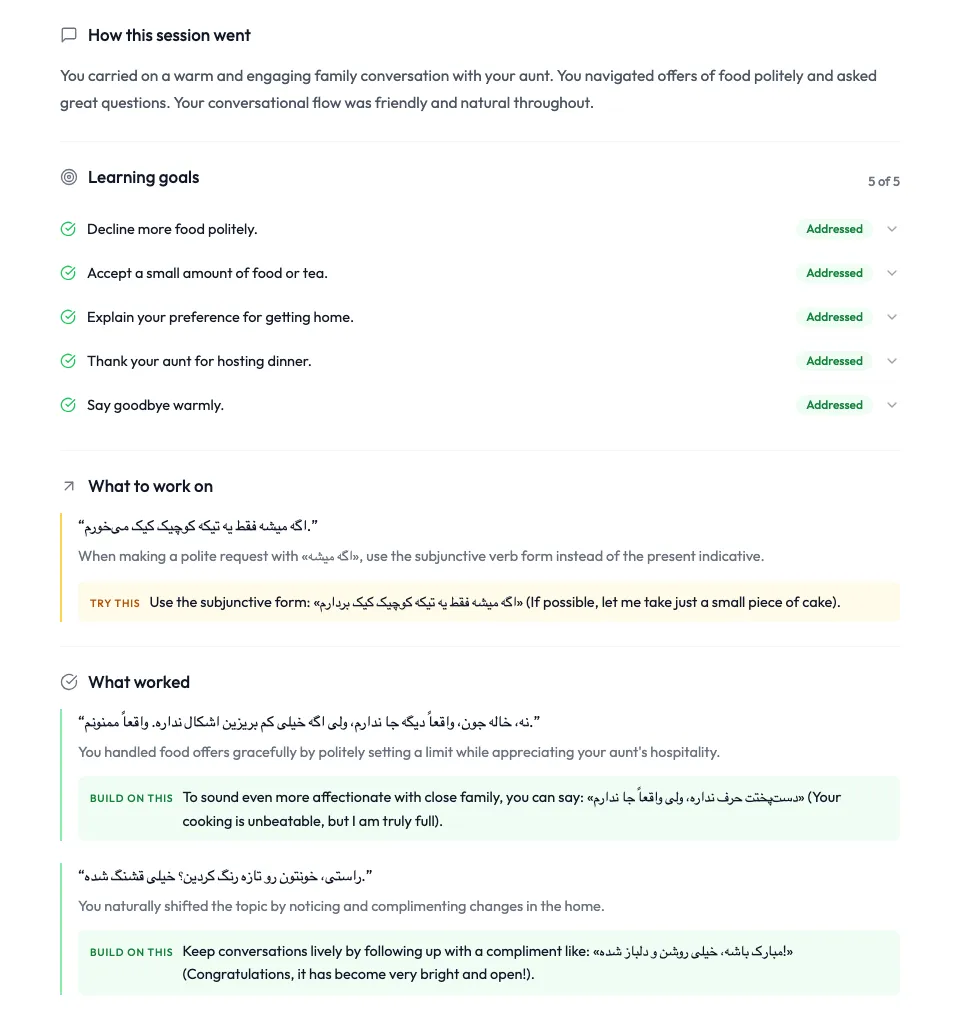
What the feedback pointed out
What the learner said
نه خاله جون، واقعا دیگه جا ندارم، ولی اگه خیلی کم بریزین، اشکال نداره. واقعا ممنونم.
A clearer way to say it
دستپختت حرف نداره، ولی واقعاً جا ندارم
You turned down more food gracefully, setting a polite limit while still appreciating your aunt's hospitality. With close family, you can sound even more affectionate by saying her cooking is unbeatable but you're truly full.
What the learner said
اگه میشه فقط یه تیکه کوچیک کیک میخورم.
A clearer way to say it
اگه میشه فقط یه تیکه کوچیک کیک بردارم
When you make a polite request that starts with "if possible," use the subjunctive form of the verb instead of the plain present tense. Here that means saying "let me take just a small piece of cake."
What the learner said
من دیگه کمکم برم، شب بخیر و خیلی ممنون از مهموننوازیتون.
A clearer way to say it
خیلی بهتون زحمت دادم، دستتون درد نکنه
Using the word for "hospitality" sounds formal and distant when you're talking to a close family member. Use warmer family phrasing instead: say you caused them so much trouble and thank them for all their effort.
When you are the host
Now the roles flip. When elders visit you, you do the offering, and the first no does not count.
خوش اومدید، صفا آوردید
Reading: khosh oomadid, safa ovordid
Meaning: Welcome, we're so glad you came.
Literally, you've brought warmth and joy with you. Use it at the door with elders and guests.
بفرمایید بالا
Reading: befarmaid bala
Meaning: Please, come sit up here.
Invites a guest to the best seat, usually the one farthest from the door. Offer it to the oldest guest first.
چه زحمتی؟ شما رحمتید
Reading: che zahmati? shoma rahmatid
Meaning: No trouble at all. Having you here is a blessing.
The warm reply when a guest apologizes for the trouble with ببخشید زحمت دادیم.
Reading the room
A real no or a polite one?
Count the rounds. A first offer or a first refusal is often politeness. If someone offers a second and third time, adds a specific reason, or starts serving you anyway, the offer is real. If you decline twice and then say you mean it, a good host will stop. With money, assume you pay: a shopkeeper or taxi driver who waves it away is being courteous, and the price follows once you insist.
When family says to stop being formal
From close family, تعارف نکن means you are at home here, so take what you actually want. It is fine to accept on the first offer then. Elders may still refill your plate, and a firm, cheerful جدی میگم، سیر شدم (I mean it, I'm full) is the polite way to stop.
Hosting elders
Greet them at the door, offer the best seat, and bring tea before they ask. Serve the oldest person first. Expect them to decline the first offer of tea, fruit, or a second helping, so offer again and simply set it in front of them. Walk them to the door when they leave.
Leaving takes a round too
Guests start leaving with دیگه رفع زحمت کنیم (we should stop troubling you). The host protests with کجا؟ حالا زوده, where are you going, it's still early. Stay a few more minutes, thank them again, and go. How much of this happens varies a lot by family, region, and generation, including in families living outside Iran.
Rehearse a family dinner out loud
Taarof is fast and happens in person, so it helps to rehearse the rounds before you are at the table. Practice declining, accepting gracefully, and thanking, until the replies come without thinking.
- Open Create with AI and paste the description below, or write your own with your family's real setting.
- Talk out loud with the AI host, who replies by voice in Persian and keeps insisting the way a real host would.
- After the conversation, check which goals you covered and the line with a clearer way to say it, then ask the AI Coach about any suggestion.
- Repeat the same dinner, this time playing the host who offers tea and food to an elder.
Describe it like this when you create the activity
Iranian Persian, colloquial Tehran style, intermediate level. I understand family Persian but freeze during taarof. You play my aunt hosting a family dinner at her home: offer me food, tea, and a ride home, and insist two or three times the way a real Iranian host would, so I practice declining politely, accepting a little, thanking you properly, and saying goodbye.
Questions learners usually ask first
What does قابل نداره (ghabel nadare) mean?
It literally means "it isn't worthy of you," and works like "it's nothing" or "don't mention it." People say it when giving a gift, and shopkeepers or drivers say it when you ask the price. In a shop it is a courtesy, not a real offer, so thank them, insist once, and pay.
How do you respond to taarof?
Match the round. When someone offers, thank them and decline once. When they insist, accept a little or decline again with a sign that you mean it, such as جدی میگم. When someone refuses your thanks or your money, answer with خواهش میکنم or اختیار دارید and repeat your offer.
How many times should you refuse in taarof?
There is no fixed number. Many people decline once or twice, and an offer that comes a third time, or comes with the host already serving you, is usually sincere. With close family who say تعارف نکن, you can accept right away.
Do I have to taarof with my own family?
Less than with guests or strangers, but most families still expect some of it, especially with grandparents, aunts, and uncles. Thanking the cook, offering to help, declining once before seconds, and walking elders to the door go a long way. Families differ, so watch how your parents handle it and follow their lead.